iApneaMate S3
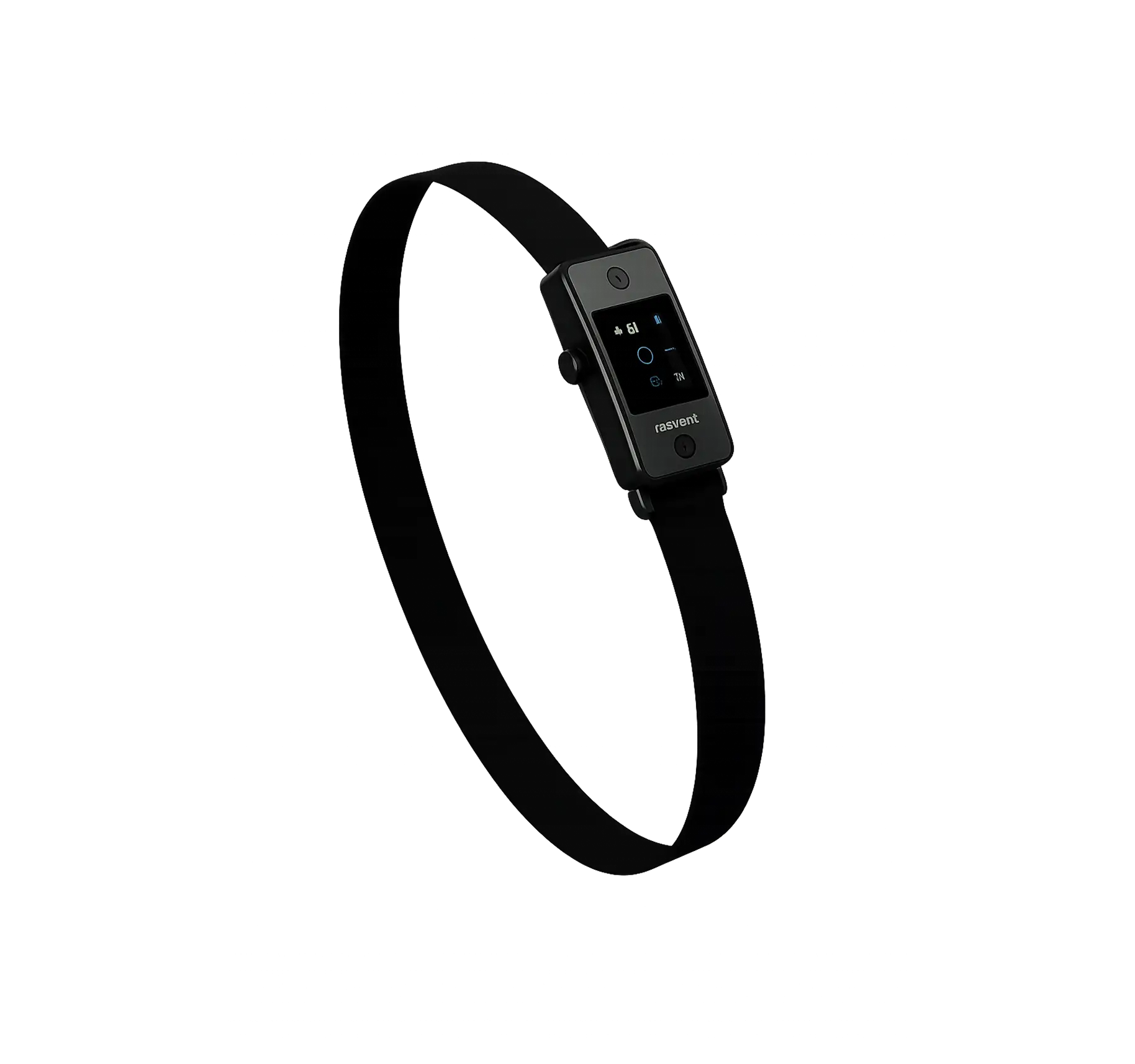
The iApneaMate S3 offers a convenient solution for at-home monitoring, capturing key indicators throughout the night, providing comprehensive data to support accurate diagnosis and personalized treatment.
Key Features:
- Tracks heart rate, blood oxygen levels, respiratory effort, airflow, body position, and snoring.
- 1.77-inch screen for monitoring.
- Compliant with the standards of the American Academy of Sleep Medicine (AASM) for clinical assessment of severe obstructive sleep apnea.




At-Home Sleep Apnea Screening
The iApneaMate S3 is a portable Type III sleep apnea diagnostic recorder certified by the American Academy of Sleep Medicine (AASM). It captures six key respiratory and cardiovascular parameters during overnight at-home studies: nasal airflow, thoracic respiratory effort, blood oxygen saturation (SpO₂), pulse rate, body position, and snoring intensity.
For institutional buyers, the iApneaMate S3 creates a closed-loop diagnostic-to-treatment pathway. Screen patients with the S3, prescribe therapy based on the results, and deploy iBreeze PAP devices for treatment — all within the same distribution relationship. This expands program scope from treatment-only to full diagnosis-and-treatment, increasing per-patient revenue and reducing referral dependency on sleep labs.
Why Institutional Buyers Choose the iApneaMate S3
Expand from treatment-only into diagnostics — screening patients and prescribing therapy through one distribution relationship.
Closed-Loop: Screen to Treat
Diagnose with the S3, prescribe therapy, deploy iBreeze PAP devices — all through SysMed USA. No separate diagnostic device vendors needed.
Reduces Sleep Lab Dependency
At-home Type III studies expand screening throughput without the cost and scheduling constraints of in-lab polysomnography. Critical for geographically dispersed patient populations.
Community Screening at Scale
Portable design enables large-scale screening initiatives in underserved LATAM markets where sleep lab access is limited or nonexistent. AASM Type III certification ensures clinical-grade results.
Frequently Asked Questions
When is a home sleep test with the iApneaMate S3 appropriate versus an in-lab polysomnography?
Home sleep testing (HST) with the S3 is appropriate for patients with high pre-test probability of moderate-to-severe OSA and no significant comorbidities that complicate diagnosis. This covers the majority of adult referrals — typically overweight patients presenting with snoring, witnessed apneas, and daytime sleepiness.
In-lab polysomnography (PSG) remains indicated for: suspected central sleep apnea, concurrent severe cardiopulmonary disease, neuromuscular disorders, pediatric patients, and cases where the home study is inconclusive or negative despite strong clinical suspicion. The practical advantage of HST: sleep labs in LATAM are scarce and expensive. Many markets have months-long PSG waitlists. The S3 lets clinicians diagnose and initiate treatment faster, at a fraction of the cost, in the patient's natural sleep environment — which often yields more representative data than a single night in an unfamiliar lab.
What parameters does the iApneaMate S3 measure, and how do they contribute to an OSA diagnosis?
The S3 records six channels simultaneously during an overnight sleep study:
Nasal airflow (via pressure transducer) — detects apneas, hypopneas, and flow limitation. Respiratory effort (thoracic and abdominal bands) — differentiates obstructive events (effort present, airflow absent) from central events (effort absent). SpO2 (pulse oximetry) — measures oxygen desaturation severity. Heart rate — captures cardiac response to apneic events. Body position — identifies positional OSA (worse supine). Snoring — correlates with upper airway resistance.
Together, these channels provide enough data to calculate the AHI (apnea-hypopnea index), classify event types, and grade OSA severity — the three outputs a clinician needs to make a treatment decision and prescribe PAP therapy.
Can patients set up the iApneaMate S3 themselves, or does it require a technician?
The S3 is specifically designed for unattended, patient-applied use. Setup involves attaching the nasal cannula, finger pulse oximeter, thoracic/abdominal effort bands, and pressing start on the device's 1.77-inch display screen. Resvent provides illustrated quick-start guides in Spanish that walk patients through each step.
Most sleep programs hand the device to the patient at an afternoon appointment, demonstrate the setup in 10–15 minutes, and have the patient return the device the next morning. No overnight technician required. This is the entire economic advantage of home sleep testing — one device can cycle through 20–30 patients per month versus a PSG lab that tests one patient per bed per night. For wholesale buyers, each S3 unit generates revenue through repeated diagnostic use, not a one-time sale.
What does AASM Type 3 classification mean for the iApneaMate S3, and why does it matter for clinical acceptance?
The American Academy of Sleep Medicine (AASM) classifies sleep diagnostic devices into four types based on the number and type of channels recorded. Type 3 devices monitor a minimum of four channels: airflow, respiratory effort, heart rate, and blood oxygen — the core parameters needed to diagnose obstructive sleep apnea (OSA) in an unattended setting.
The iApneaMate S3 exceeds this minimum with 6-lead monitoring: airflow, respiratory effort, SpO2, heart rate, body position, and snoring. Type 3 classification is the clinical threshold for insurance reimbursement in most LATAM markets. Type 4 devices (pulse oximetry only) are considered screening tools, not diagnostic. Hospitals and sleep clinics need Type 3 or higher to bill for home sleep testing. The S3's classification ensures the study results are accepted for treatment decisions and PAP therapy initiation.
How does selling the iApneaMate S3 create downstream demand for SysMed PAP devices?
Every positive OSA diagnosis generates a PAP therapy prescription. The S3 sits at the top of a revenue funnel: diagnose → prescribe → equip → supply consumables. A distributor who places S3 units in sleep clinics and pulmonology practices isn't just selling a diagnostic device — they're generating qualified demand for iBreeze CPAP, APAP, and BPAP systems downstream.
The math is straightforward: if an S3 unit processes 25 patients per month and the OSA positivity rate is roughly 70–80% in referred populations, that's 17–20 new PAP therapy candidates per device per month. Multiply that across a fleet of S3 units placed with your clinical accounts, and the downstream device and mask volume compounds rapidly. SysMed can structure bundle pricing for distributors running a full diagnostic-to-treatment pipeline.