iBreeze III
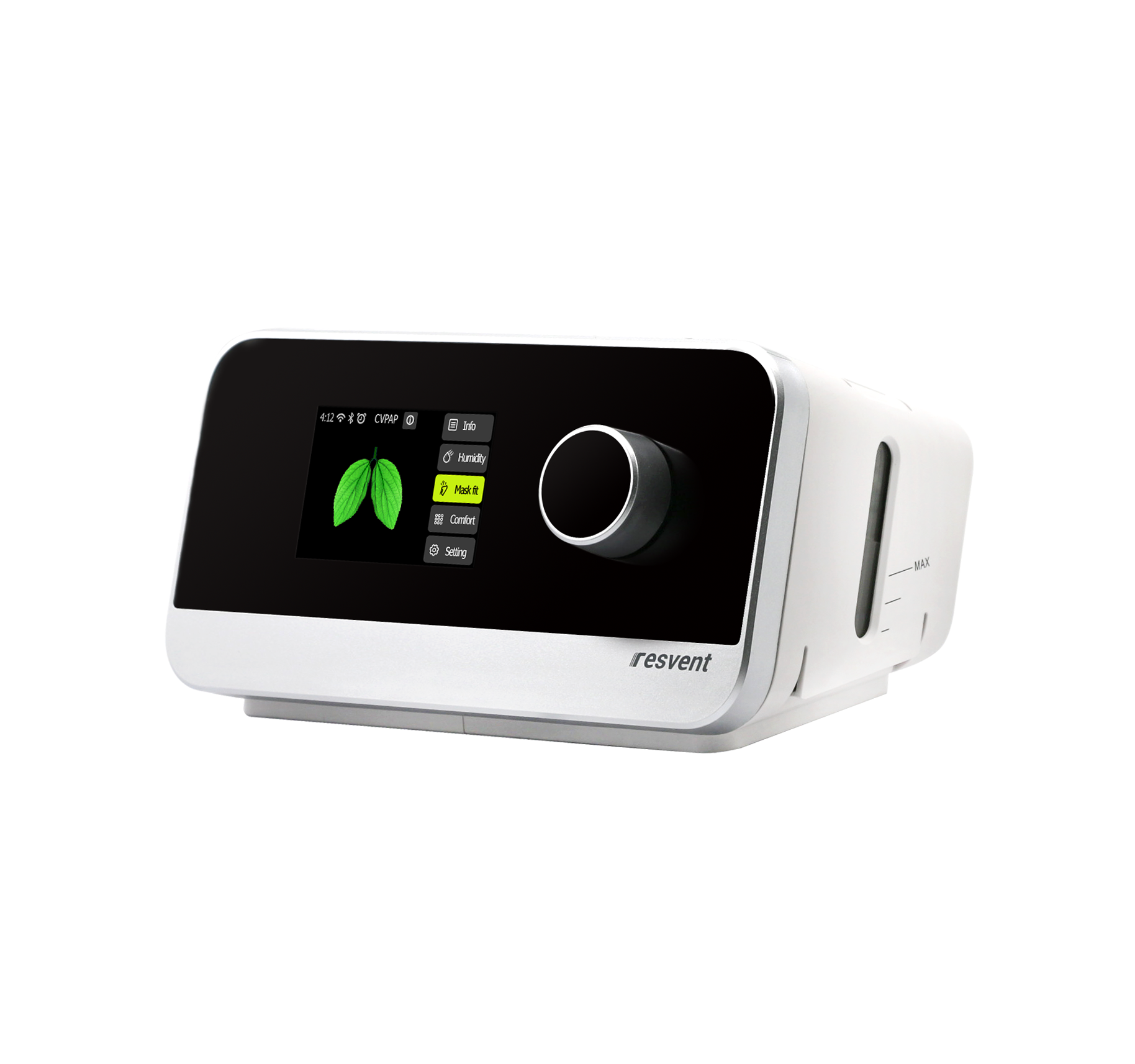
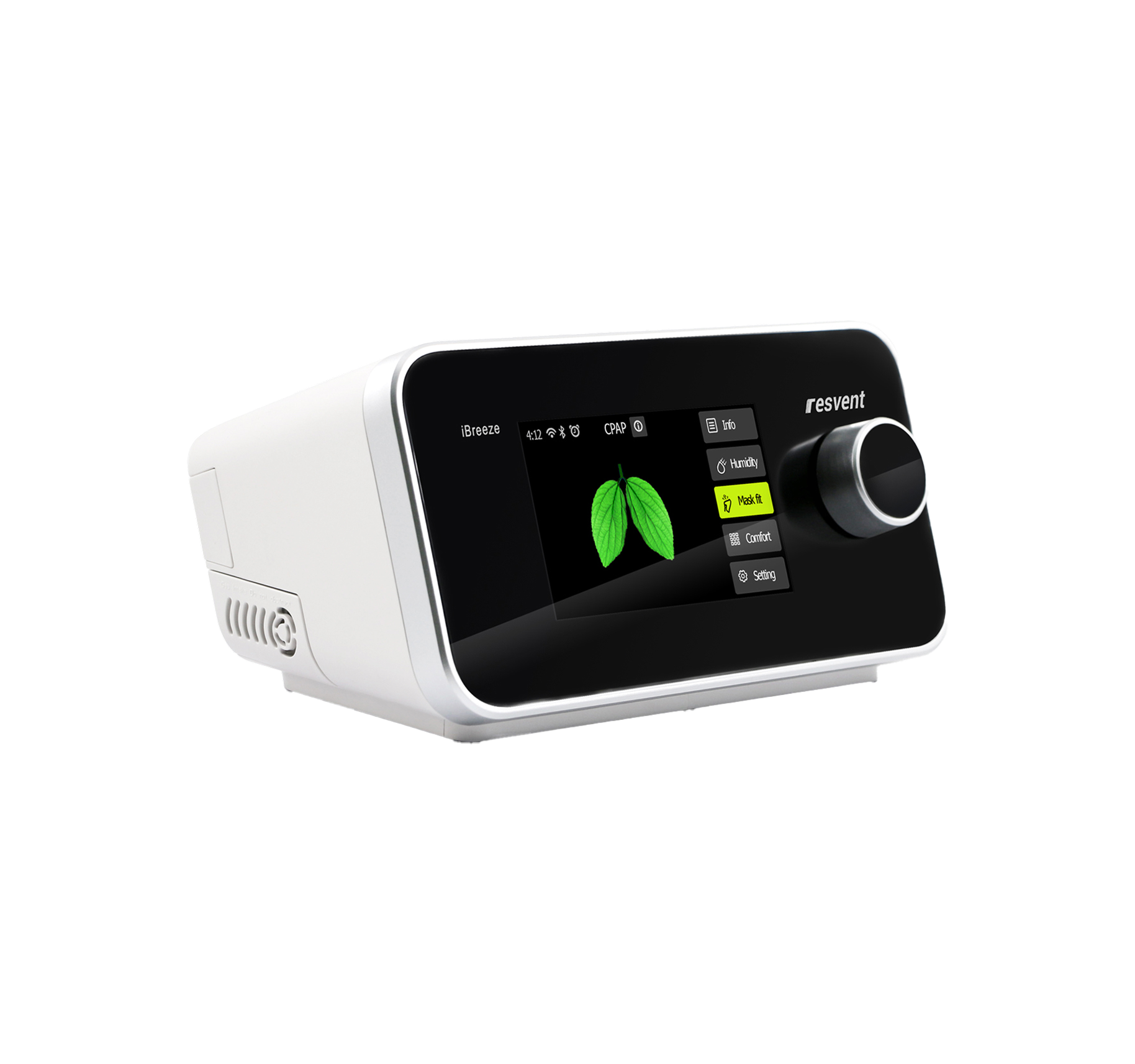
The iBreeze III Series represents the latest in Resvent’s PAP technology, engineered for quieter operation, enhanced comfort, and smarter therapy. Available in CPAP, CPAP Pro, APAP, and APAP Pro.
Key Features:
- Designed with patient comfort in mind, for a more pleasant therapy experience.
- Ultra-quiet operation with proprietary noise-reduction down to 25 dB.
- Advanced sync technology for smoother, more natural breathing.
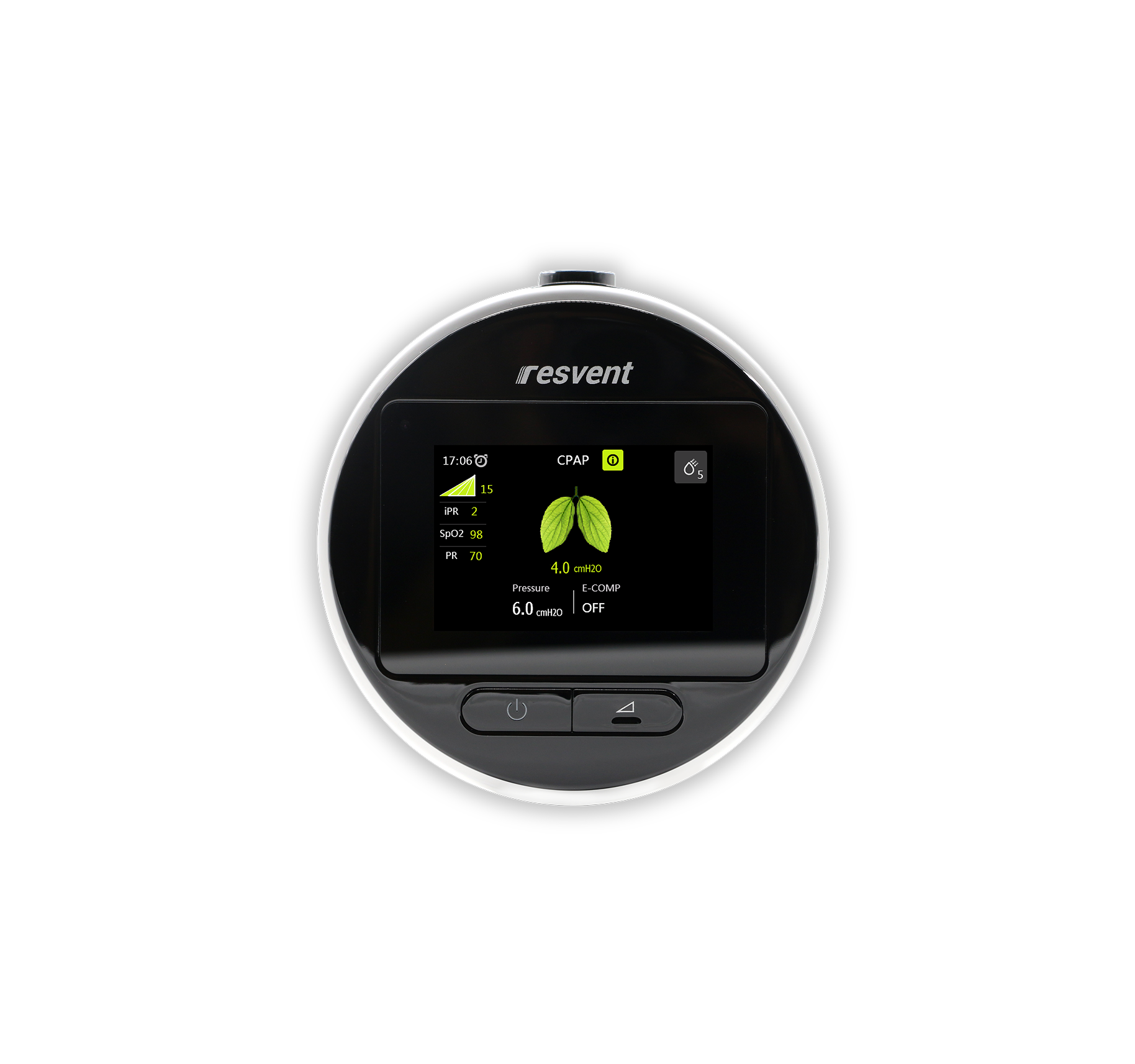
- Smart features include Auto Start/Stop, Pressure Ramp, IPR, and Mask Fit detection.
- Enhanced heated tubing for consistent, comfortable humidity.
- Real-time data logging with long-term SD storage and optional WiFi/GSM connectivity.
- ResAssist™ Cloud platform for sleep data access and remote management.




Quietest PAP Platform at Wholesale
The iBreeze III Series is Resvent's latest-generation PAP platform, delivering meaningful improvements in noise reduction, patient comfort, and therapy intelligence over the original iBreeze line. Available in four configurations — CPAP, CPAP Pro, APAP, and APAP Pro — it offers institutional buyers a range of clinical depth within a single device family.
The headline improvement is noise: at 25 dB, the iBreeze III is the quietest PAP device available at wholesale. Since noise is the number-one driver of therapy abandonment, this improvement has direct impact on compliance rates — the metric institutional buyers track most closely.
Why Institutional Buyers Choose the iBreeze III
Next-generation comfort and clinical depth in a platform backward compatible with your existing iBreeze ecosystem.
25 dB — Quietest at Wholesale
Noise is the leading cause of CPAP abandonment. The iBreeze III operates 3+ dB below its predecessor and well below the 30+ dB industry average — directly improving compliance rates.
Four Variants, One Family
CPAP, CPAP Pro, APAP, and APAP Pro cover the full range of clinical needs. Base models for standard prescriptions, Pro variants for advanced therapy customization — all in one product family.
Heated Tubing Eliminates Rainout
Enhanced heated tube support maintains consistent humidity through the delivery circuit, preventing condensation buildup — a common complaint that causes therapy interruption and support calls.
Connectivity & Data Management
The iBreeze integrates with two platforms, one for fleet operations, one for clinical depth.
ResAssist™
Fleet-level therapy monitoring & management
- Real-time therapy data upload (AHI, usage hours, leak rates, pressure trends)
- Remote prescription changes without patient visits
- Fleet-wide compliance dashboards for administrators
- Secure data transmission via WiFi or GSM/GPRS
- Multi-patient management across distributed networks
iMatrix™
Professional-grade clinical analysis
- Deep respiratory event analysis for clinicians
- Patient record management across device populations
- Exportable reports for compliance documentation
- Therapy optimization insights and trend analysis
- Integration with institutional reporting workflows
How the iBreeze Compares
For wholesale buyers evaluating PAP devices for institutional procurement across Latin America.
ResMed AirSense
ResMed dominates global market share with extensive clinical validation. However, AirSense devices are priced for the retail/insurance market.
iBreeze advantage: Wholesale pricing for large-volume institutional procurement
Philips DreamStation
Following Philips' global CPAP recall affecting millions of devices, supply chain reliability has become a critical procurement criterion.
iBreeze advantage: Zero recall history, consistent supply
BMC Medical Luna
BMC's Luna devices compete in a similar price segment but lack cellular connectivity options for remote fleet management.
iBreeze advantage: GSM/GPRS module for low-infrastructure regions
Frequently Asked Questions
How does the iBreeze III's Mask Fit detection work, and how does it reduce patient callbacks?
The iBreeze III Pro variants include real-time Mask Fit detection that analyzes airflow patterns to identify mask seal quality before the patient falls asleep. If the algorithm detects a significant leak, it alerts the patient through the device display to adjust their mask — catching the problem at bedtime rather than discovering it in the morning's therapy report.
For DME providers and sleep clinics, this reduces a major operational pain point: patient callbacks for poor therapy scores caused by mask leaks. Instead of the patient calling in after a bad night (or worse, silently abandoning therapy), the issue gets resolved in real time. It also reduces the number of unnecessary mask exchanges — often the leak wasn't the mask's fault, just the fit.
How does the iBreeze III achieve 25 dB noise levels, and what does that mean in practice?
The iBreeze III uses Resvent's proprietary noise-reduction engineering — redesigned blower geometry, internal acoustic baffling, and optimized airflow pathways — to reach 25 dB. That's quieter than a rural bedroom at night (typically 30–35 dB) and significantly below the 26–28 dB range of the current market leaders.
In clinical terms, the difference between 25 dB and 28 dB is more meaningful than the numbers suggest. Decibels are logarithmic — a 3 dB reduction represents a roughly 50% decrease in perceived sound intensity. For patients and bed partners, this can be the difference between sleeping through therapy and being kept awake by it. The noise spec is a concrete differentiator that distributors can lead with in product comparisons.
How does the iBreeze III's enhanced heated tubing prevent condensation and rainout?
Rainout — condensation pooling in the tubing and splashing onto the patient's face — is one of the most common comfort complaints with heated humidification. The iBreeze III addresses this with enhanced heated tubing that maintains consistent temperature along the full length of the hose, not just at the device outlet.
The system monitors ambient room temperature and adjusts tubing heat output to prevent the temperature differential that causes condensation. This is more sophisticated than basic heated tubes that run at a fixed temperature regardless of environment. For LATAM markets with significant nighttime temperature drops (highland cities like Bogotá, Quito, Mexico City), this adaptive approach matters more than in climate-controlled environments.
What are the differences between the iBreeze III CPAP, CPAP Pro, APAP, and APAP Pro variants?
The iBreeze III ships in four configurations, each targeting a different clinical and market segment:
CPAP — fixed single-pressure therapy for straightforward OSA. Lowest cost configuration, suitable for markets where clinician preference runs toward manual titration. CPAP Pro — adds enhanced data logging, full ResAssist™ cloud connectivity, and advanced comfort algorithms. APAP — auto-adjusting pressure with breath-by-breath optimization. Outsells fixed CPAP in most LATAM markets. APAP Pro — the flagship: full auto-titration, ResAssist™, enhanced heated tubing control, and Mask Fit detection.
All four share the same 25 dB platform and physical form factor. The tiered approach lets distributors position different SKUs at different price points within the same product family — entry-level through premium — without stocking entirely different devices.
How does the iBreeze III compare to the original iBreeze CPAP/APAP, and should distributors stock both?
The iBreeze III is Resvent's latest-generation platform — not just a cosmetic refresh. Key improvements over the original iBreeze: 25 dB vs 26 dB noise, enhanced heated tubing with ambient adaptation, Mask Fit detection (Pro variants), and improved sync technology for smoother pressure transitions.
Whether to stock both depends on your market's price sensitivity. The original iBreeze remains a strong value-tier option that competes aggressively on price while still delivering cloud connectivity and competitive clinical performance. The iBreeze III targets premium positioning. Many distributors run both — the original iBreeze as the volume play for price-sensitive institutional tenders, and the iBreeze III for private clinics and DME providers selling directly to patients who prioritize comfort features.