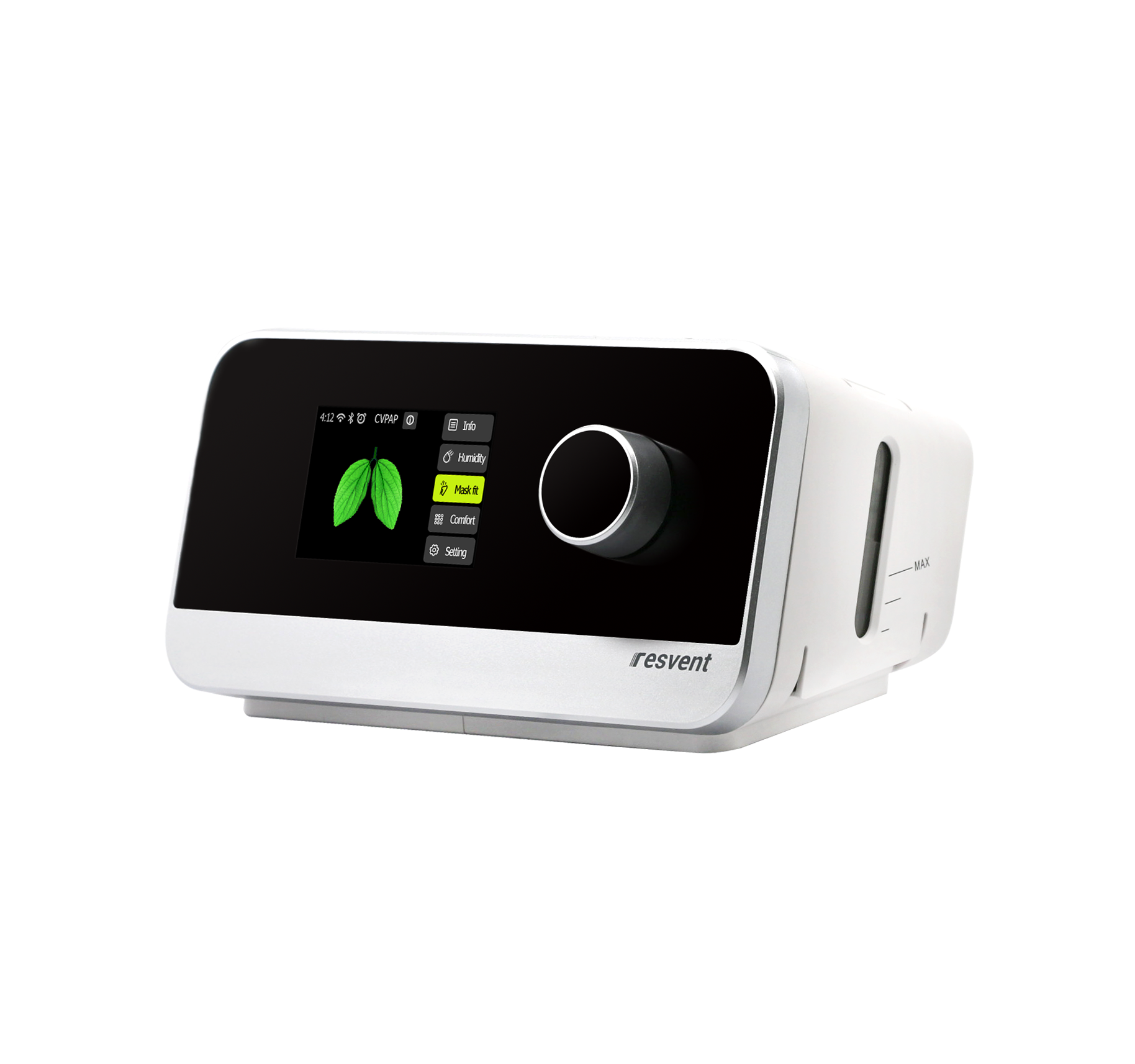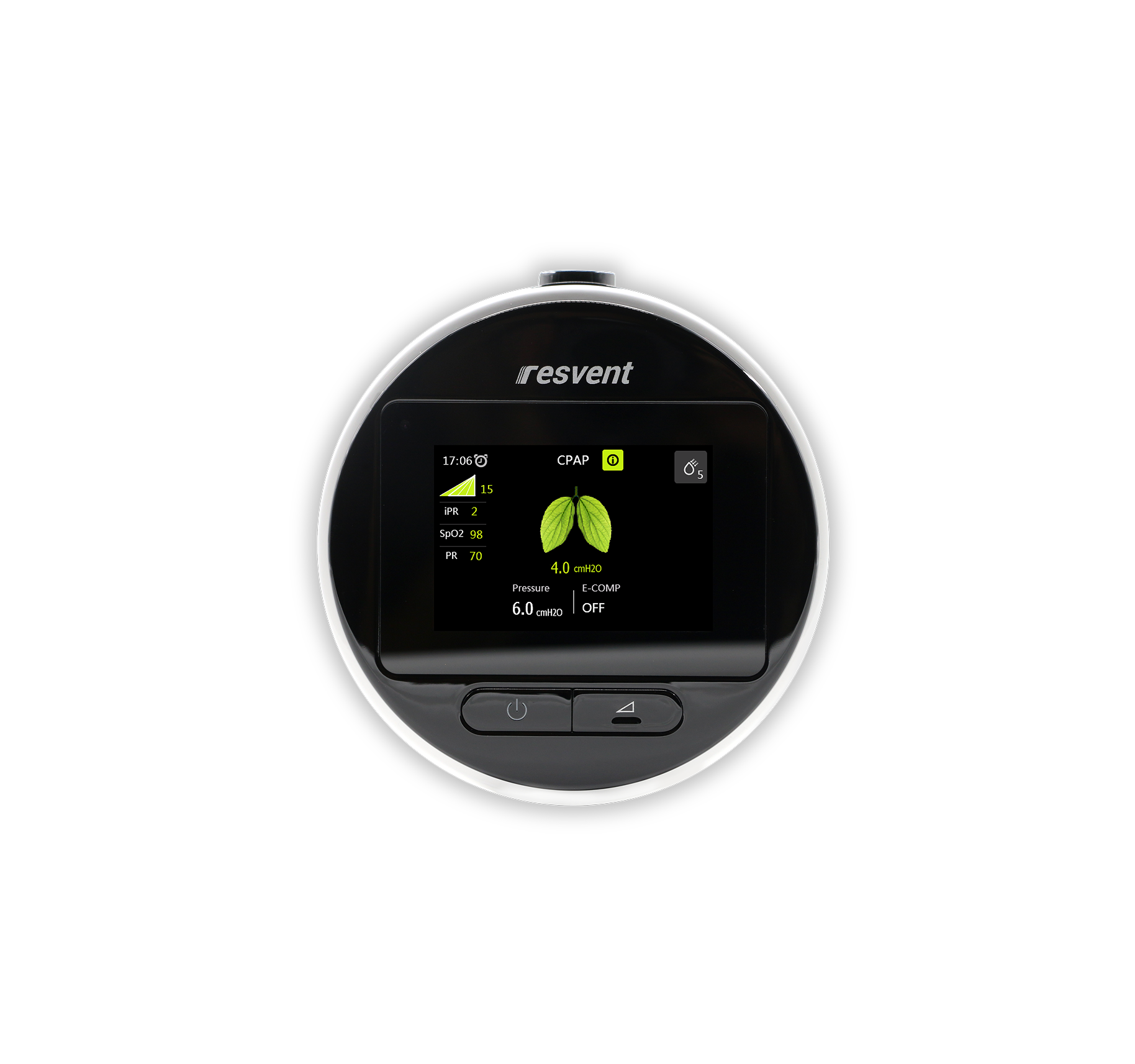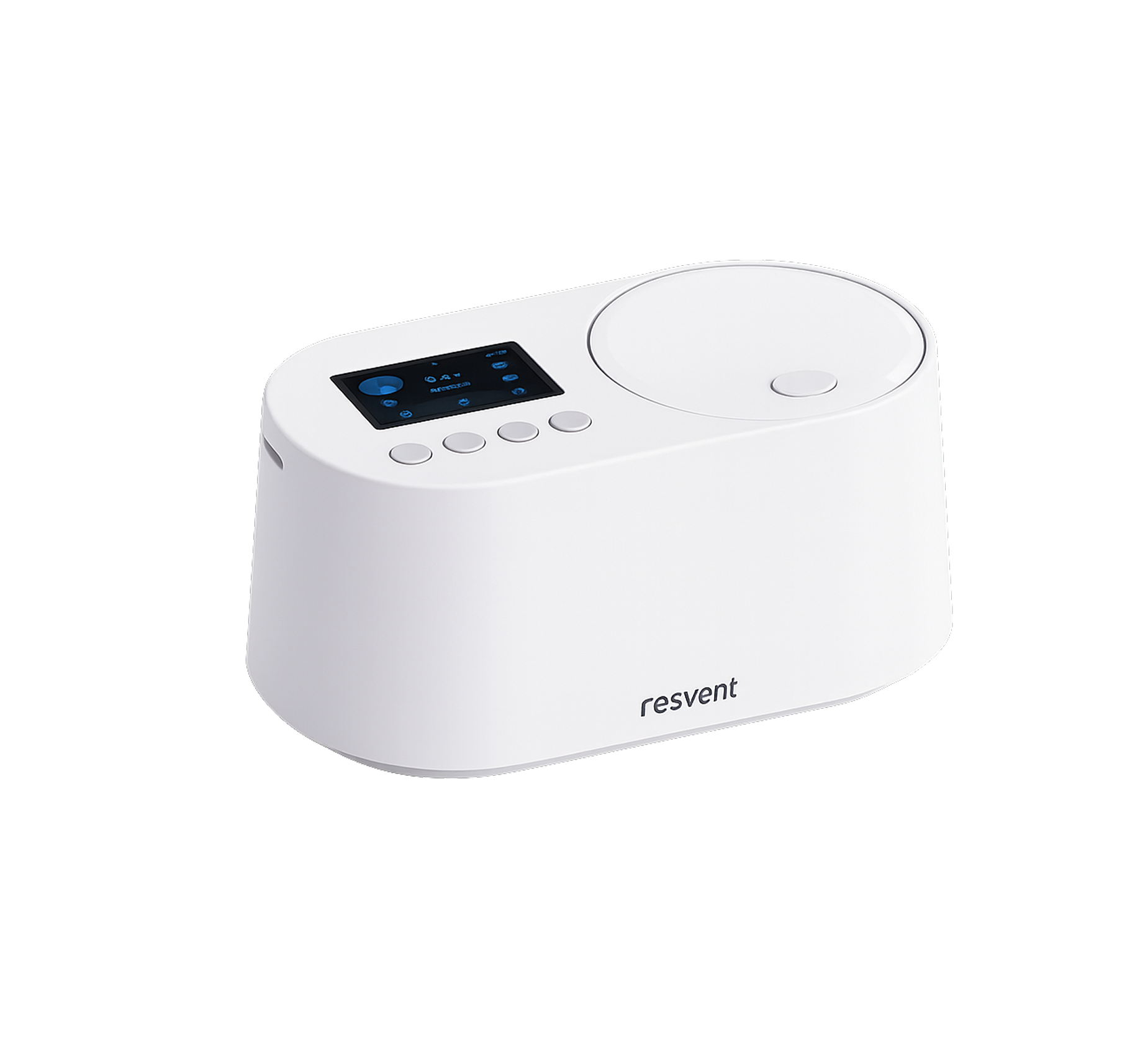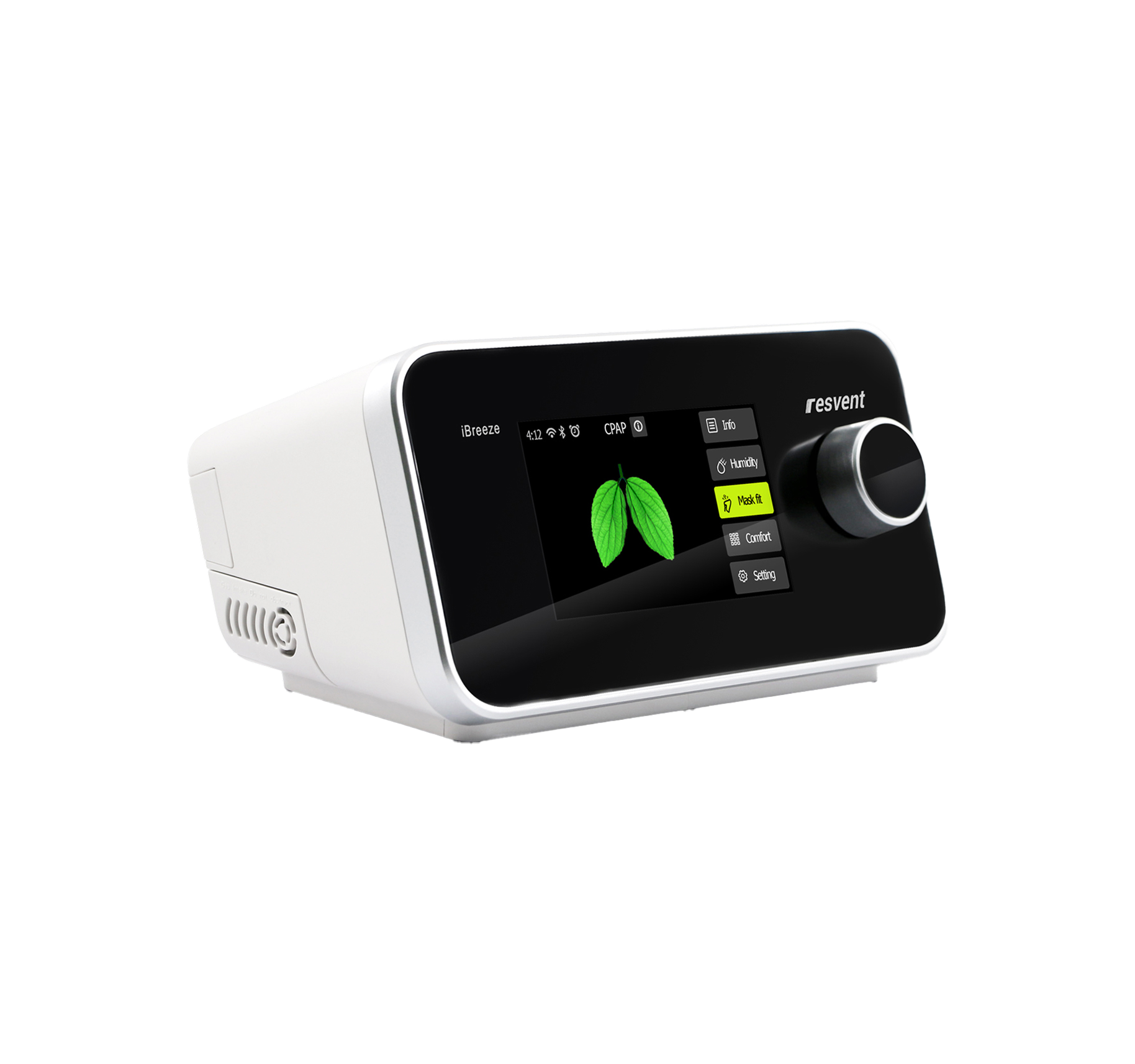
iBreeze BPAP
The iBreeze BiPAP offers comfortable, non-invasive respiratory support with two pressure levels to make breathing easier and more natural. With real-time pressure adjustments, integrated heated humidification, and quiet operation, the iBreeze BiPAP ensures consistent, personalized therapy throughout the night.
Key Features:
- 5-inch touch screen.
- Synchronizes with the patient’s breathing in as little as 0.1 seconds
- Multiple therapy modes with automatic settings for a quick startup.
- Intelligent Pressure Release (IPR) with three customizable modes for personalized comfort.
- EVAPS (Essential Volume Assured Pressure Support) automatically adjusts pressure to deliver the set target tidal volume.
- Real-time data logging with long-term SD storage and optional WiFi/GSM connectivity.
- ResAssist™ Cloud platform for sleep data access and remote management.




Bi-Level Pressure for Complex Cases
The iBreeze BPAP delivers bi-level positive airway pressure therapy using two distinct pressure levels: a higher pressure during inhalation (IPAP) and a lower pressure during exhalation (EPAP). This dual-pressure approach makes breathing more natural and comfortable for patients who cannot tolerate the fixed pressure of standard CPAP devices.
BiPAP therapy targets more complex respiratory conditions — including central and complex sleep apnea, COPD-OSA overlap syndrome, and obesity hypoventilation syndrome. For institutional buyers, the iBreeze BPAP expands the treatable patient population beyond what CPAP alone can address, reducing referrals and increasing program scope.
Why Institutional Buyers Choose the iBreeze BPAP
Bi-level therapy for complex respiratory cases, built on the same ecosystem as the full iBreeze line.
Handles Cases CPAP Cannot
Central apnea, COPD overlap, obesity hypoventilation — the BPAP addresses conditions requiring dual-pressure therapy, expanding your treatable patient population without adding device vendors.
EVAPS Volume Assurance
Essential Volume Assured Pressure Support auto-adjusts to maintain clinician-set tidal volume — critical for patients with severe or variable respiratory insufficiency.
Shared iBreeze Ecosystem
Same ResAssist™ cloud platform, accessories, and humidifier system as the CPAP/APAP model. One set of training, spare parts, and fleet management tools across your entire PAP lineup.
Connectivity & Data Management
The iBreeze integrates with two platforms, one for fleet operations, one for clinical depth.
ResAssist™
Fleet-level therapy monitoring & management
- Real-time therapy data upload (AHI, usage hours, leak rates, pressure trends)
- Remote prescription changes without patient visits
- Fleet-wide compliance dashboards for administrators
- Secure data transmission via WiFi or GSM/GPRS
- Multi-patient management across distributed networks
iMatrix™
Professional-grade clinical analysis
- Deep respiratory event analysis for clinicians
- Patient record management across device populations
- Exportable reports for compliance documentation
- Therapy optimization insights and trend analysis
- Integration with institutional reporting workflows
How the iBreeze Compares
For wholesale buyers evaluating PAP devices for institutional procurement across Latin America.
ResMed AirSense
ResMed dominates global market share with extensive clinical validation. However, AirSense devices are priced for the retail/insurance market.
iBreeze advantage: Wholesale pricing for large-volume institutional procurement
Philips DreamStation
Following Philips' global CPAP recall affecting millions of devices, supply chain reliability has become a critical procurement criterion.
iBreeze advantage: Zero recall history, consistent supply
BMC Medical Luna
BMC's Luna devices compete in a similar price segment but lack cellular connectivity options for remote fleet management.
iBreeze advantage: GSM/GPRS module for low-infrastructure regions
Frequently Asked Questions
What therapy modes does the iBreeze BPAP support, and which clinical scenarios does each cover?
The iBreeze BPAP supports four therapy modes covering the full spectrum of non-invasive positive pressure applications:
CPAP — continuous single-pressure mode for straightforward obstructive sleep apnea. S (Spontaneous) — delivers bilevel pressure triggered by the patient's own breathing, standard for OSA patients who need higher EPAP/IPAP differentials. S/T (Spontaneous/Timed) — adds a backup respiratory rate for patients with central apnea events or variable respiratory drive. T (Timed) — fully machine-controlled breathing rate for patients with minimal spontaneous effort.
This mode range means a single iBreeze BPAP unit covers clinical scenarios from mild OSA through complex chronic respiratory failure — reducing the number of device SKUs hospitals need to stock.
How does Intelligent Pressure Release (IPR) improve patient comfort on the iBreeze BPAP?
IPR reduces pressure during early exhalation — the moment when patients most commonly feel they're breathing against the machine. The iBreeze BPAP offers three IPR modes with adjustable intensity, letting clinicians fine-tune how aggressively the device drops pressure at the start of each breath out.
This isn't cosmetic. Exhalation discomfort is the single largest driver of PAP therapy dropout in the first 30 days. When patients feel they can't exhale naturally, they stop using the device. IPR addresses this directly by making the pressure transition feel more like natural breathing. For distributors selling into hospital sleep programs and DME channels, IPR is a tangible comfort differentiator that reduces return rates and improves 90-day adherence metrics — both of which affect reimbursement eligibility in managed care environments.
What does the iBreeze BPAP's 0.1-second response time mean for patient-ventilator synchrony?
The iBreeze BPAP detects the onset of inspiration and switches from EPAP to IPAP in as little as 0.1 seconds — faster than most competing bilevel devices in the same price class. This speed directly affects how "natural" the device feels to the patient.
When there's a perceptible delay between the patient starting to inhale and the machine delivering pressure, it creates a fighting sensation called patient-ventilator asynchrony. This leads to air hunger, arousal from sleep, and ultimately device abandonment. The 0.1s trigger response keeps the iBreeze in lockstep with the patient's respiratory cycle, which is particularly important for S/T mode patients with irregular breathing patterns from central sleep apnea or neuromuscular conditions.
What is EVAPS on the iBreeze BPAP, and why does it matter for complex respiratory patients?
EVAPS (Essential Volume Assured Pressure Support) automatically adjusts inspiratory pressure to deliver a clinician-set target tidal volume — even as the patient's respiratory effort changes through sleep stages, positional shifts, or disease progression. This is a step beyond standard BiPAP, which only delivers fixed pressure differentials.
The clinical significance: patients with obesity hypoventilation syndrome, neuromuscular disease, or COPD overlap often have variable respiratory drive. Fixed bilevel pressure may underventilate during deep sleep and overventilate during lighter stages. EVAPS compensates dynamically, maintaining consistent alveolar ventilation throughout the night. For institutional buyers, this positions the iBreeze BPAP as a versatile device that covers both standard OSA bilevel therapy and more complex ventilatory support without needing a separate dedicated ventilator.
What warranty coverage does the iBreeze BPAP carry, and how does SysMed handle service parts?
The iBreeze BPAP carries a standard manufacturer warranty covering defects in materials and workmanship. Warranty terms and duration are specified in each wholesale distribution agreement and may vary by market. SysMed handles all warranty claims directly — distributors don't need to coordinate with Resvent's factory in China.
For service parts (blower assemblies, circuit boards, pressure sensors, humidifier components), SysMed maintains Miami-based inventory for rapid fulfillment to LATAM markets. Replacement parts ship on the same logistics corridors as new devices, with typical lead times of 5–14 business days depending on destination. This matters because in-field device downtime directly affects your customer relationships — a hospital waiting 8 weeks for a part from Shenzhen is a hospital evaluating alternative suppliers.